
|
Domestic First: Mass Production of 100% Rice Cakes 2026-01-29 |
|
|---|---|
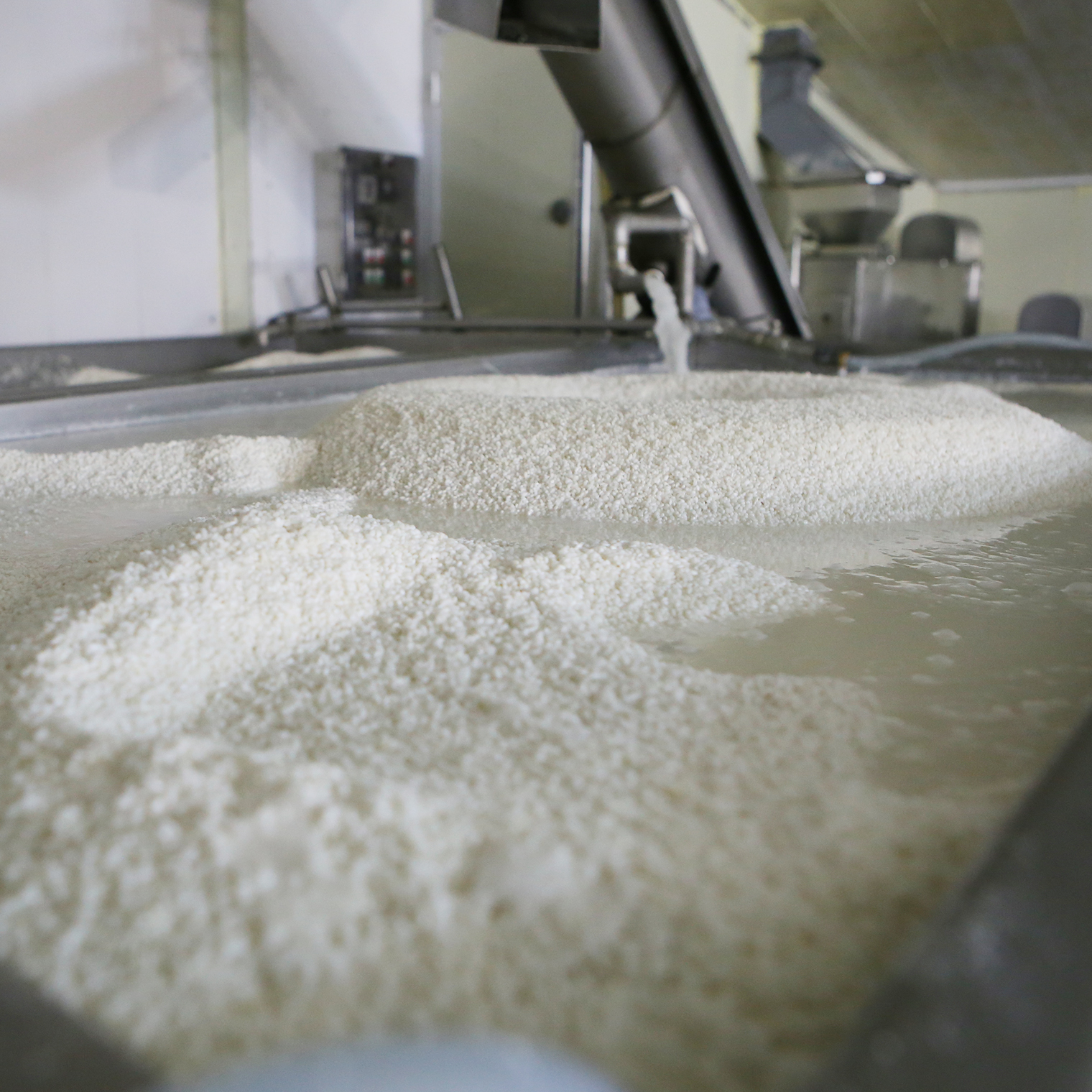
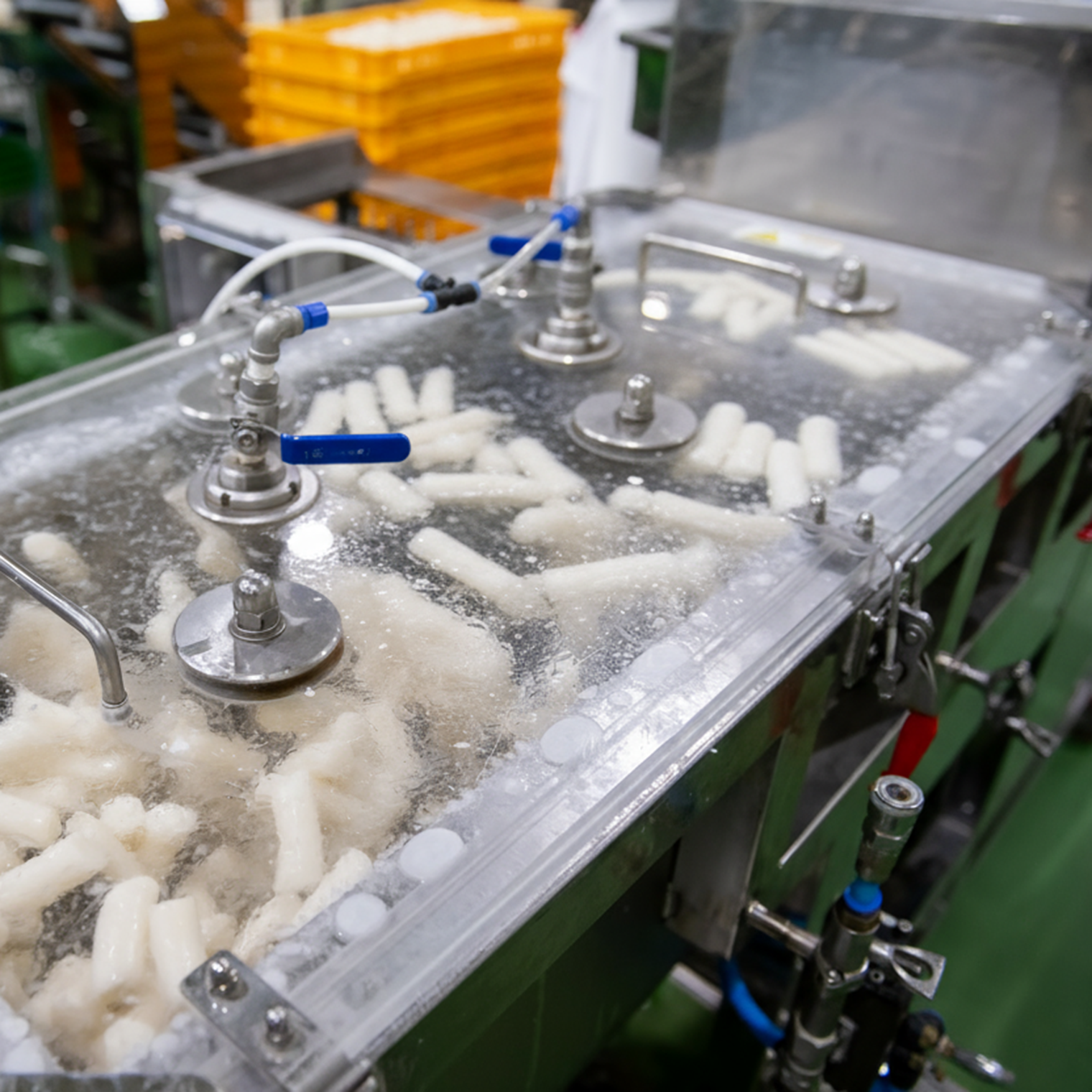
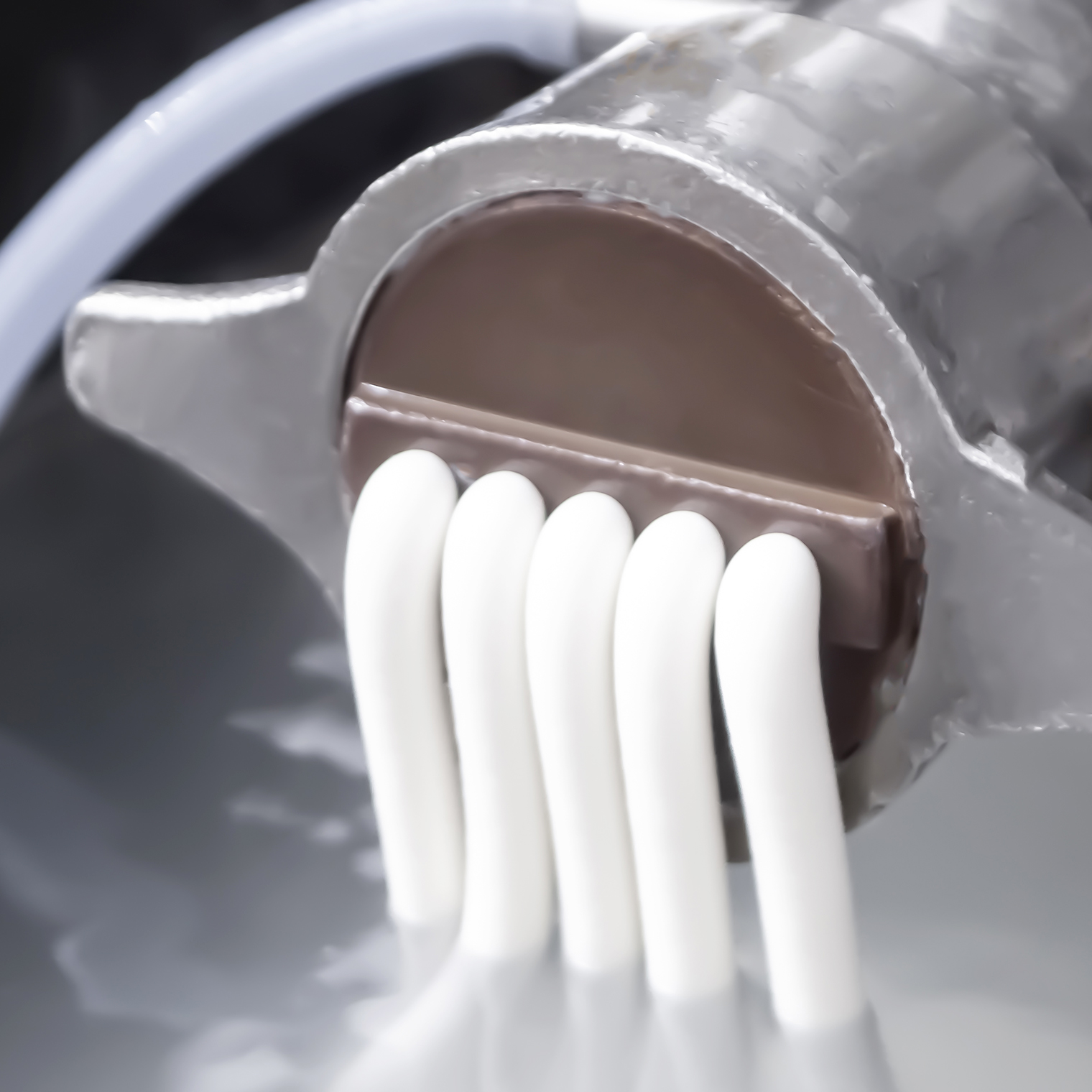
Mass production of rice cakes began by building the machinery from scratch. Founder Lee Neung-gu recognized the limitations of traditional mill-style equipment. Quality varied widely, and production required heavy manual labor. Applying the principle of an electric pressure rice cooker, he led the entire process—from initial sketches to fabrication and continuous improvements. The result was a steaming cooker that traps steam and cooks while stirring internally. This equipment established a standardized production flow—from rice flour crushing to steaming, molding, and cooling—and opened the era of mass-produced rice cakes. But production alone was not enough. At the time, rice-processed foods absorbed a lot of moisture, and their shelf life was so short that most products had to be discarded if they were not sold the same day. From the beginning, the company ruled out preservatives and instead overhauled process hygiene at its core. An underwater UV sterilizer was installed inside the soaking tank to block contamination sources. Cutting, weighing, and packaging were converted into an aseptic automated line to minimize human contact. This is how tteokguk rice cakes and tteokbokki rice cakes that could be distributed safely without preservatives were born. A decisive breakthrough was the alcohol-soaking method. Inspired by insights from Japan’s processed food industry, this technique extended shelf life without preservatives. Market response was immediate and strong, and orders soon exceeded production capacity. Later, the company shared the technology with the industry free of charge, helping expand the foundation for growth across Korea’s rice-processed food sector. An early distribution breakthrough came from an underground shopping mall in a Gangnam apartment complex. As new supermarkets such as Woosung and Lucky began to appear, Lee went beyond simple supply deals. By helping store managers with overnight shelf stocking and display—an approach rooted in partnership—he earned their trust. As a result, the company effectively became the exclusive supplier to supermarkets across the Gangnam area, quickly growing sales by reaching a high-spending customer base. Above all, Chilkab Nongsan has upheld one principle from the earliest days of distribution to the present: “Rice cakes must be made from rice.”
While many companies at the time sold wheat-based rice cakes, or cakes mixed with wheat flour, under the name “rice cake,” Chilkab produced only 100% rice cakes—backed by the newly developed mass-production machinery. This principle was not only a commitment to preserving tradition and supporting rural communities. It also created a clear gap in taste and texture, becoming a competitive advantage that made customers come back asking specifically for Chilkab rice cakes. As a result, Chilkab Nongsan established itself as the first company in Korea to successfully mass-produce and commercialize 100% rice cakes. Innovation in manufacturing (systemizing steaming and molding), distribution technology (aseptic packaging, UV sterilization, and the alcohol-soaking method), and pioneering the Gangnam supermarket channel came together. They set an industry standard for making more, making efficiently, and selling farther and longer.
This became the foundation for Chilkab Nongsan’s growth as a leading company in rice consumption. Even today, it continues to play an important role in supporting Korea’s rural communities and the development of agriculture as a front-runner in promoting rice consumption. Excerpt from “Chilkab Nongsan: The Story of 100% Rice Cake Production” |
|
|
이전글
|
Prev
|
|
다음글
|
Next
|