
Chilkab Story
|
Faster, Chewier Noodles with Three-Stage Extrusion 2026-01-29 |
|
|---|---|
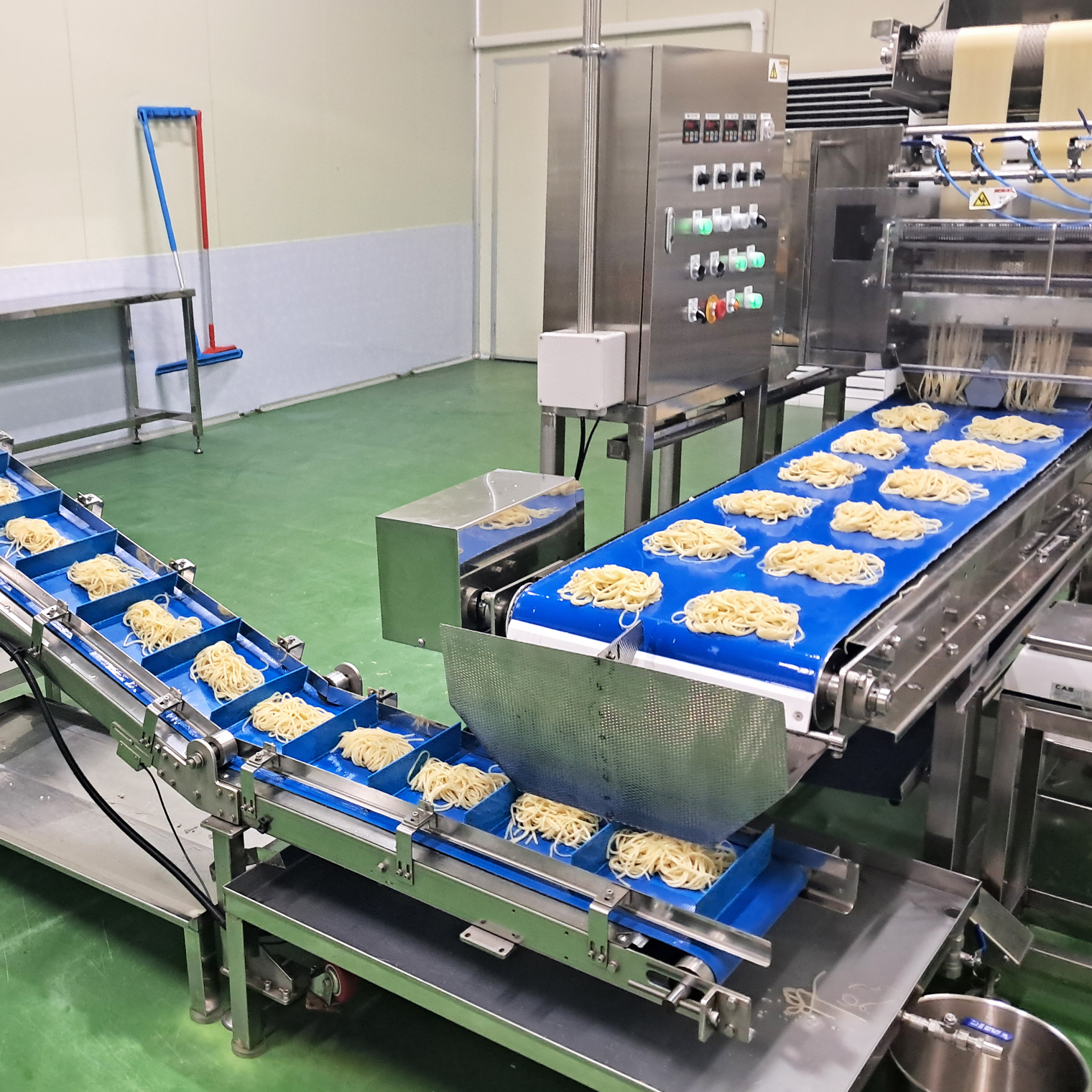
Three-stage extrusion is a noodle-making technology in which kneading and extrusion are performed in three consecutive stages. Unlike standard single-pass extrusion, this process builds a tighter internal structure step by step— raising noodle density while enhancing both elasticity and a smooth, tender bite. This structural difference is what delivers “firm chew” when you bite and “clean softness” as you swallow. The benefits are especially clear in buckwheat noodles. Traditional buckwheat noodles can break easily or loosen during boiling due to the nature of starch. With three-stage extrusion, the internal structure becomes denser, helping the strands stay continuous without frequent breakage. As a result, the noodles can be boiled right away without needing to separate strands like typical naengmyeon noodles. They finish with a chewy texture in a shorter cooking time without sticking together. This improves cooking convenience, reduces the chance of failure at home, and makes timing control easier in large-scale cooking environments. The impact is also significant across product applications. The Naengcheongol series is a lineup where the advantages of three-stage extrusion are immediately noticeable. Even after rinsing in cold water, the noodle core holds its structure well, and the noodles cling effectively to broth and seasonings— delivering both satisfying chew and a refreshing, smooth slurp. The same staged extrusion is also applied to newer products such as udon noodles, reinforcing noodle structure so they remain springy and chewy without turning mushy even when left in hot soup. This allows the technology to support a wider range of menus— from hot soups to cold salads and spicy mixed dishes— with stable, consistent quality. Market response has been positive. Consumers highlight that the noodles “don’t break down easily and stay chewy longer,” and that “texture holds up even with short boiling time.” Three-stage extrusion products such as the Naengcheongol series and udon noodles have been welcomed for these practical advantages. The significance is not in showcasing a process for its own sake, but in delivering real benefits— shorter cooking times, fewer cooking failures, and a better everyday eating experience.
Chilkab Nongsan is taking the technology further by applying three-stage extrusion selectively where it best fits. Based on each ingredient’s starch structure and water absorption— buckwheat, wheat, and rice— as well as the target texture such as springiness, softness, and elasticity, the company continues R&D to refine recipes. Pressure, temperature, moisture, and aging time are adjusted precisely. Rather than applying one uniform process to every product, Chilkab Nongsan fine-tunes the intensity of three-stage extrusion to match product concepts and cooking contexts— broth-based, mixed, or stir-fried; and home, foodservice, or institutional dining. In short, three-stage extrusion enhances density, elasticity, and softness through staged extrusion and aging. Thanks to this technology, buckwheat noodles can be boiled directly without separating strands, achieving a chewy texture in a short time. Products such as the Naengcheongol series and udon noodles have gained strong traction by combining cooking convenience with stable texture. Chilkab Nongsan will continue expanding the application of three-stage extrusion through precision process design— bringing “better-tasting noodles” that consumers can truly feel in everyday meals. Excerpt from “Chilkab Nongsan: The Story of Chewier Three-Stage Extrusion” |
|
|
이전글
|
Prev
|
|
다음글
게시물이 없습니다.
|
Next
There is no post.
|